
Reducing Retinal Blindness Worldwide
- Retina Research Foundation
- About RRF
- Pilot Study Grants
- Grant Recipients 2026
- Yingbin Fu, PhD
- Wei Li, PhD
- Yuqing Huo, MD, PhD
- Rinki Ratnapriya, PhD
- Rui Chen, PhD
- Wenbo Zhang, PhD
- Curtis Brandt, PhD
- Lih Kuo, PhD
- Timothy Corson, PhD
- Jianhai Du, PhD
- James Monaghan, PhD
- Seongjin Seo, PhD
- Andrius Kazlauskas, PhD
- Ann C. Morris, PhD
- Christine Sorenson, PhD
- Jeffrey M. Gross, PhD
- David M. Wu, MD, PhD
- Kinga Bujakowska, PhD
- Eric Weh, PhD
- Ching-Kang Jason Chen, PhD
- Jakub K. Famulski, PhD
- Thanh Hoang, PhD
- Georgia Zarkada, MD, PhD
- Eleftherios Paschalis Ilios, PhD
- Oleg Alekseev, MD, PhD
- Erika Tatiana Camacho, PhD
- Patricia R. Taylor, PhD
- Elizabeth Vargis, PhD
- Ximena Corso Díaz, PhD
- Michael Landowski, PhD
- Brian Perkins, PhD
- Carlos S. Subauste, MD
- Rebecca Voorhees, PhD
- Publications
- Grant Guidelines and Information
- Grant Application
- Grant Recipients 2026
- Research Programs
- Contact Us
- Giving
- RRF History
- Home
Eleftherios Paschalis Ilios, PhD
Department of Ophthalmology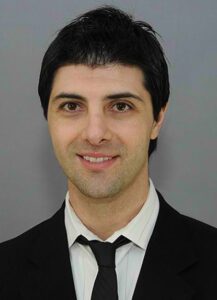
Massachusetts Eye and Ear Infirmary
Harvard Medical School
Boston, MA
TRANSLATIONAL/PRE-CLINICAL RESEARCH PROJECT
Research Interests
Age-related macular degeneration (AMD) is the leading cause of central vision loss in people over 50. Globally, it is estimated that approximately 196 million people are affected by AMD, with the majority being in developed countries where the population is aging. In the United States, approximately 11 million people have some form of AMD, with about 1.8 million of them having the advanced form. The standard of care for the treatment of wet AMD is frequent intravitreal injections of antibodies against the vascular endothelial growth factor (VEGF). Although these injections slow the development of new retinal vessels, they also gradually cause progressive neuroretinal atrophy and blindness, likely due to the need of life long administration. More recently, bi-specific antibodies that can target two pathways involved in the progression of the disease, such as VEGF and Ang2, were approved by FDA as a more effective therapy for AMD, though clinical data suggest that the new therapy provides marginal improvement in patients.
Plans for 2026
The goal of this project is to create a treatment that not only better prevents vision loss but also dramatically reduces the burden of frequent injections, ultimately preserving sight and improving the quality of life for millions of people.
Dr. Paschalis’s laboratory has developed a revolutionary new approach. His team discovered that the runaway blood vessel growth in AMD is driven by two distinct
biological signals: one that promotes vessel growth (VEGF) and another that causes inflammation (TNF-alpha). Current drugs only block the first signal. the Paschalis lab has engineered a single, powerful antibody that blocks both of these signals at the same time. In preclinical studies, a single injection of this new dual-action drug completely halted all leaky vessel growth for more than three months—a result far superior to any currently available therapy. In 2026, the lab will complete its pivotal studies by testing both of the lead antibodies in AMD. By comparing the two, Dr. Paschalis can select the single best candidate to advance into human clinical trials.
Progress in 2025
During the 2025 grant period, Dr. Paschalis successfully created and manufactured 8 versions of this breakthrough antibody and scaled-up two of the most potent, which were prepared to the highest standards required for clinical use. Additionally, the crucial first study in a non-human primate model of AMD, which is a pivotal step towards human trials was begun.
Progress in 2024
Dr. Paschalis’ objective is to develop a new therapy for AMD. Along with his colleagues, he has discovered two pathways that cause neovascularization and if blocked simultaneously, can result in complete inhibition of development of new vessels (neovascularization). He is in the final stages of assessing the safety and efficacy of a new bi-specific antibody and if results in 2024 are positive, Dr. Paschalis Ilios intends to rapidly transition into human clinical trials.
