
Reducing Retinal Blindness Worldwide
- Retina Research Foundation
- About RRF
- Pilot Study Grants
- Grant Recipients 2026
- Yingbin Fu, PhD
- Wei Li, PhD
- Yuqing Huo, MD, PhD
- Rinki Ratnapriya, PhD
- Rui Chen, PhD
- Wenbo Zhang, PhD
- Curtis Brandt, PhD
- Lih Kuo, PhD
- Timothy Corson, PhD
- Jianhai Du, PhD
- James Monaghan, PhD
- Seongjin Seo, PhD
- Andrius Kazlauskas, PhD
- Ann C. Morris, PhD
- Christine Sorenson, PhD
- Jeffrey M. Gross, PhD
- David M. Wu, MD, PhD
- Kinga Bujakowska, PhD
- Eric Weh, PhD
- Ching-Kang Jason Chen, PhD
- Jakub K. Famulski, PhD
- Thanh Hoang, PhD
- Georgia Zarkada, MD, PhD
- Eleftherios Paschalis Ilios, PhD
- Oleg Alekseev, MD, PhD
- Erika Tatiana Camacho, PhD
- Patricia R. Taylor, PhD
- Elizabeth Vargis, PhD
- Ximena Corso Díaz, PhD
- Michael Landowski, PhD
- Brian Perkins, PhD
- Carlos S. Subauste, MD
- Rebecca Voorhees, PhD
- Publications
- Grant Guidelines and Information
- Grant Application
- Grant Recipients 2026
- Research Programs
- Contact Us
- Giving
- RRF History
- Home
Thanh Hoang, PhD
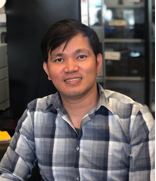 Department of Ophthalmology
University of Michigan
Ann Arbor, MI
BASIC RESEARCH PROJECT
Control of neurogenesis during retinal development
Research Interests
The irreversible loss of retinal neurons underlies the pathology of many blinding diseases, such as macular degeneration, retinitis pigmentosa and glaucoma. Therefore, effective cell-based therapies that can replenish the se cells via cell transplantation or endogenous reprogramming are urgently needed. To achieve this goal, it is crucial to gain a deep understanding of the gene regulatory networks and mechanisms that control the generation of different retinal cell types. Over the course of retinal development, retinal progenitors progressively generate diverse types of retinal neurons and Müller glia. However, the molecular mechanisms that control this process remain largely unclear.
Plans for 2026
This study aims to identify the role of transcription factor Insm1 during mouse retinal development and regeneration. The research will enhance the current understanding of how different retinal cell types are produced, as well as help guide cell based therapies aimed at replacing retinal neurons.
In 2026, Dr. Hoang’s laboratory will characterize generated neurons in a mouse model of photoreceptor degeneration, and develop an AAV-based approach to reprogram Müller glia.
Specific Aims:
Aim1. Determine the impact of photoreceptor degeneration on the regenerative outcomes of Müller glial cells
Aim2. develop a AAV-based strategy to drive Müller glia reprogramming via Insm1 expression.
Progress in 2025
Resulting from 2025 studies, Dr. Hoang’s lab generated a transgenic mouse line that allows for the over expression of Insm1 specifically in adult retinal Müller glia. The team found Insm1 over expression alone did not result in obvious Müller glia cell reprogramming and neurogenesis. However, combined Insm1 over expression and inhibition of Notch signaling results in a robust generation of retinal neurons in adult mice. These generated neurons represent a diverse type of retinal neurons. The team also found for the first time, neurons expressing cone photoreceptor markers were also generated.
Progress in 2024
During 2024, Dr. Hoang performed retinal-specific deletion of Insm1 during mouse development, and found that loss of Insm1 did not result in an obvious defect in retinal cell type formation. However, Insm1 deletion resulted in progressive retinal degeneration and gliosis. Furthermore, Dr. Hoang also found that Insm1 over expression substantially enhances the regeneration of neurons from Notch signaling-deficient Müller glia cells in adult mice.
