
Reducing Retinal Blindness Worldwide
- Retina Research Foundation
- About RRF
- Pilot Study Grants
- Grant Recipients 2026
- Yingbin Fu, PhD
- Wei Li, PhD
- Yuqing Huo, MD, PhD
- Rinki Ratnapriya, PhD
- Rui Chen, PhD
- Wenbo Zhang, PhD
- Curtis Brandt, PhD
- Lih Kuo, PhD
- Timothy Corson, PhD
- Jianhai Du, PhD
- James Monaghan, PhD
- Seongjin Seo, PhD
- Andrius Kazlauskas, PhD
- Ann C. Morris, PhD
- Christine Sorenson, PhD
- Jeffrey M. Gross, PhD
- David M. Wu, MD, PhD
- Kinga Bujakowska, PhD
- Eric Weh, PhD
- Ching-Kang Jason Chen, PhD
- Jakub K. Famulski, PhD
- Thanh Hoang, PhD
- Georgia Zarkada, MD, PhD
- Eleftherios Paschalis Ilios, PhD
- Oleg Alekseev, MD, PhD
- Erika Tatiana Camacho, PhD
- Patricia R. Taylor, PhD
- Elizabeth Vargis, PhD
- Ximena Corso Díaz, PhD
- Michael Landowski, PhD
- Brian Perkins, PhD
- Carlos S. Subauste, MD
- Rebecca Voorhees, PhD
- Publications
- Grant Guidelines and Information
- Grant Application
- Grant Recipients 2026
- Research Programs
- Contact Us
- Giving
- RRF History
- Home
Erika Tatiana Camacho, PhD
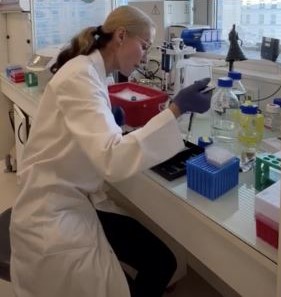 Department of Neuroscience, Developmental and Regenerative Biology
University of Texas Health Science Center at San Antonio
San Antonio, TX
BASIC RESEARCH PROJECT
Modeling the role of 6-phosphofructo-2-kinase/fructose-2, 6 bisphosphatase 2 in retinal metabolism and retinal degenerative diseases
Research Interests
Photoreceptors are responsible for vision and depend on glycolysis, the metabolic process by which glucose is broken down by cells to produce energy, for the majority of their energy requirements. Disruptions in metabolic processes can lead to photoreceptor degeneration, worsening vision, and complete blindness. There is currently no treatment to reverse photoreceptor degeneration, so it is imperative to understand and prevent the underlying processes that cause their degeneration.
In retinal degenerative diseases (RDD), such as retinitis pigmentosa (RP) and age-related macular degeneration (AMD), disruptions in metabolic processes can lead to photoreceptor degeneration, worsening vision, and eventually complete blindness. However, the mechanisms and causes of metabolic dysregulation in RDD are poorly understood. For example, the enzyme 6-phosphofructo-2-kinase/fructose-2, 6 bisphosphatase 2 (PFKFB2) plays an important role in the regulation of glycolysis, yet it
remains relatively unexamined in retinal disease. Dr. Camacho seeks to improve the understanding of metabolic changes in RDD involving photoreceptors. Her lab team will model and investigate the expression and function of PFKFB2 in RP retinal metabolism using wild type mice (as a baseline) and rd10 mice (a mouse model for RP). Dr. Camacho hopes this will lay the groundwork for continued research and modeling into other enzymes or other RDDs, like AMD.
Previous research indicates that disruptions in glycolysis play an important role but are poorly understood in RP and other retinal diseases, such as AMD. Evidence suggests that dysregulation of PFKFB2, plays a role in the glycolytic disruptions in RP. Past work by Dr. Camacho has demonstrated the efficacy of modeling glycolysis in the photoreceptors. Using this work as a guide, this project will focus on modeling PFKFB2’s role in glycolysis during the development and progression of RP.
Plans in 2026
Dr. Camacho’s lab will continue examining the role that blue light plays in retinal
degeneration, and expand their work to include the original aims of examining the
role of PFKFB2 on retinal metabolism in both wild type and RDD mice. The team will undertake the following:
1. Generation and collection of experimental data on enzyme expression, metabolite
concentration, and retinal structure and function from wild type and diseased retinas.
2. Creation of a mathematical model of retinal metabolism using the data collected.
3. In the long term, continue to refine the model with data from other enzymes and
uncover possible treatments to reverse or prevent metabolic dysregulation in RDD.
Progress in 2025
Dr. Camacho began examination of retinal dysregulation due to the influence of blue light exposure in wild type mice. We examined both low-intensity blue light (LIBL) and moderate-intensity blue light (MIBL) exposure in juvenile and adult mice, and examined mice for the health and functionality of the retina after blue light exposure. Given the prominent role that blue light exposure plays in our current world even in the case of RDD, such as RP and AMD, having this baseline together with control mice will be an important step to fully understand aspects of retinal dysregulation. A poster was presented at the FASEB conference Biology and Chemistry of Vision in Southbridge, MA, June 22-26 on the project’s results to date.
